AI Art Installation
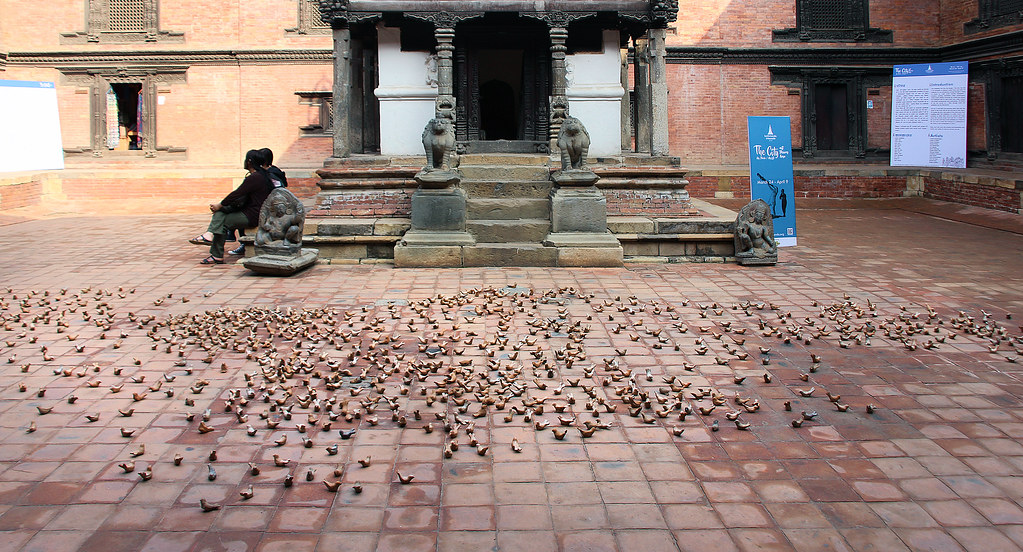
In an era where technology and creativity are converging at unprecedented speed, the AI Art Installation stands as a testament to the evolving relationship between human expression and machine intelligence. This project, a centerpiece of Ricardo Arturo Cabral’s portfolio, explores how artificial intelligence can be harnessed not merely as a tool, but as a collaborative partner in the artistic process. The result is an immersive, thought-provoking experience that challenges our perceptions of authorship, creativity, and the very nature of art itself.
Concept and Vision
The AI Art Installation was conceived from a simple yet profound question: What happens when we allow machines to dream? Rather than using AI as a means to replicate existing styles or generate images on demand, Cabral envisioned a system that could evolve its own aesthetic over time. The installation is designed to be a living, breathing entity—one that learns from its environment, reacts to its audience, and continuously generates new visual narratives.
At its core, the project is an exploration of generative art, a field where artists create systems that can produce artwork autonomously. However, Cabral’s approach goes beyond simple algorithms. By integrating machine learning models trained on diverse datasets—from classical paintings to abstract expressionism—the installation synthesizes these influences into something entirely new. The AI does not merely imitate; it interprets, combines, and innovates, producing pieces that are both familiar and alien.
The vision behind this work is not to replace human artists but to expand the boundaries of what is possible. Cabral believes that AI can act as a mirror, reflecting our own creative impulses back at us in unexpected ways. The installation invites viewers to question their assumptions about creativity and to consider the potential of human-machine collaboration.
Technical Implementation
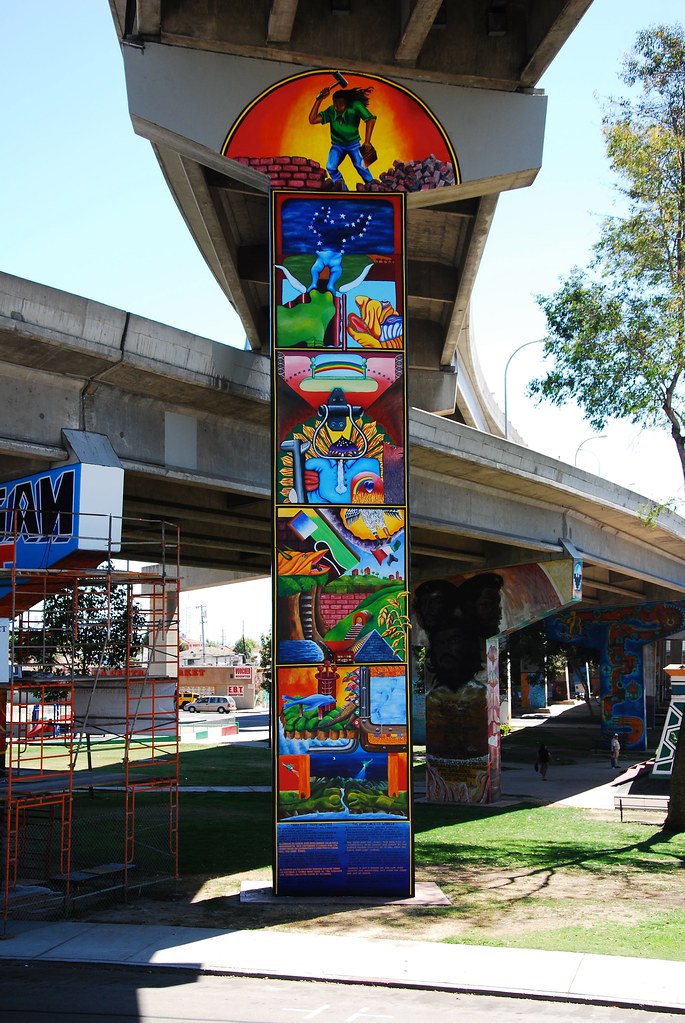
Building the AI Art Installation required a sophisticated blend of hardware and software. The core of the system is a custom neural network architecture, specifically a generative adversarial network (GAN), which consists of two competing networks: a generator that creates images and a discriminator that evaluates them. Through this adversarial process, the AI continuously refines its output, striving to produce works that are increasingly compelling and original.
The installation runs on a high-performance GPU cluster, enabling real-time generation and display of artworks. A key challenge was ensuring that the AI’s output remained coherent and aesthetically pleasing while still being unpredictable. To achieve this, Cabral implemented a technique known as latent space interpolation, which allows the system to smoothly transition between different visual concepts. This creates a fluid, ever-changing display that never repeats itself.
Another crucial component is the audience interaction layer. Sensors and cameras track the movement and presence of viewers, feeding this data back into the AI. The system uses this input to modulate its creative parameters—for example, the color palette might shift in response to the number of people in the room, or the complexity of patterns might increase as viewers draw closer. This turns the installation into a participatory experience, where the audience becomes an integral part of the creative loop.
Data and Training
The AI was trained on a carefully curated dataset of over 100,000 images spanning multiple art movements, from Renaissance masterpieces to contemporary digital art. To avoid bias and encourage novelty, the training process included techniques such as style mixing and noise injection. This ensures that the AI does not simply reproduce existing works but instead forges new visual languages.
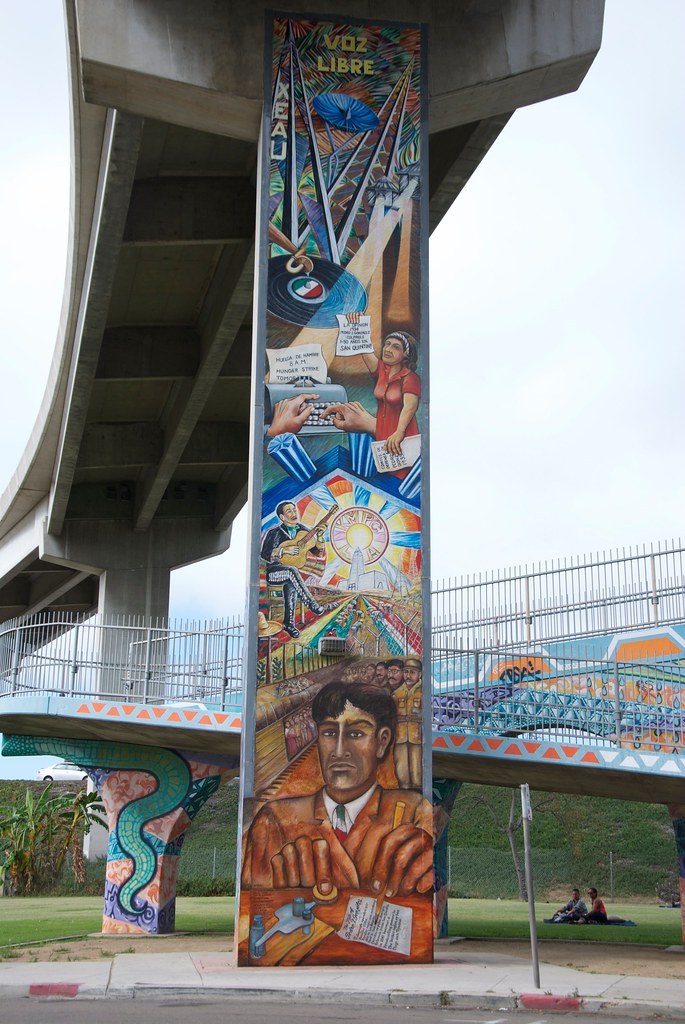
One of the most innovative aspects of the training is the use of reinforcement learning from human feedback (RLHF). During initial exhibitions, viewers were invited to rate the generated artworks on a simple scale. This feedback was used to fine-tune the model, aligning its output more closely with human aesthetic preferences while still preserving an element of surprise. Over time, the AI developed a distinct “personality” that reflects the collective tastes of its audience.
Artistic Process and Collaboration
For Cabral, the AI Art Installation is not a solo endeavor but a true collaboration between artist and machine. The creative process involves a constant dialogue: Cabral sets the initial parameters and curates the training data, but the AI makes countless micro-decisions that shape the final output. This dynamic relationship is at the heart of the project’s philosophy.
“The most exciting moments are when the AI surprises me—when it produces something I could never have imagined. That’s when I know we’re truly creating together.”
This collaborative approach extends to the physical presentation of the work. The installation is designed to be modular, allowing it to adapt to different spaces and contexts. In each new environment, the AI recalibrates its parameters based on the acoustics, lighting, and even the ambient temperature. This means that no two exhibitions of the AI Art Installation are ever the same; each is a unique performance shaped by its surroundings.
Cabral also emphasizes the importance of curation in the age of AI art. While the AI can generate an infinite stream of images, not all are worthy of display. The artist acts as a filter, selecting the most compelling pieces and arranging them in a way that tells a story. This human touch is essential, ensuring that the installation remains meaningful and not just a technical spectacle.

Audience Experience and Interaction
Visitors to the AI Art Installation are immediately struck by its immersive nature. The space is typically dark, with large screens or projections displaying the AI’s creations in high resolution. Ambient sound, also generated by the AI, fills the room, creating a synesthetic experience that engages multiple senses. The overall effect is both meditative and exhilarating.
Interaction is a key component. As viewers move through the space, their presence influences the art in real time. Some installations feature touch-sensitive panels where visitors can “steer” the AI’s direction, while others use motion tracking to create a sense of co-creation. This blurring of the line between observer and participant is deliberate; Cabral wants to break down the traditional barriers of the art world and make creativity accessible to all.
Feedback from audiences has been overwhelmingly positive, with many describing the experience as “hypnotic” and “mind-expanding.” Some viewers report feeling a sense of connection to the machine, as if they are witnessing the birth of a new form of consciousness. Others are more skeptical, questioning whether AI-generated art can truly be considered “art.” These debates are exactly what Cabral hopes to provoke.
Ethical Considerations and Future Directions
As with any technology that intersects with creativity, the AI Art Installation raises important ethical questions. Who owns the copyright to AI-generated art? Can a machine be considered an artist? What are the implications for human artists if AI can produce works of comparable quality? Cabral addresses these issues head-on, acknowledging that there are no easy answers.
One of his key arguments is that AI should be seen as a tool for augmenting human creativity rather than replacing it. Just as the camera did not eliminate painting but instead opened up new possibilities, AI has the potential to expand the artistic landscape. However, this requires careful stewardship. Cabral advocates for transparency in how AI systems are trained and for giving credit to the human artists whose work contributes to the training data.
Looking ahead, Cabral plans to continue developing the AI Art Installation, exploring new models and interaction methods. He is particularly interested in the potential of multimodal AI, which can generate not only images but also text, music, and even sculpture. The ultimate goal is to create a fully integrated artistic environment where every element is co-created by human and machine.
- Exploring real-time collaboration between multiple AI agents
- Integrating natural language prompts for more direct audience control
- Developing a version that can be experienced remotely via virtual reality
- Partnering with musicians and dancers to create interdisciplinary performances
Conclusion
The AI Art Installation is more than just a technological marvel; it is a profound meditation on the nature of creativity in the digital age. By inviting us to witness—and participate in—the birth of machine-generated art, Ricardo Arturo Cabral challenges us to rethink our assumptions about what art can be. As AI continues to evolve, projects like this will play a crucial role in shaping the future of human expression.
For those interested in exploring more of Cabral’s work, be sure to visit the Selected Works page, which offers a comprehensive overview of his diverse projects. You may also be interested in his Neon Dashboard UI, a stunning example of interface design, or his Brand Redesign for Café, which showcases his ability to blend aesthetics with functionality.